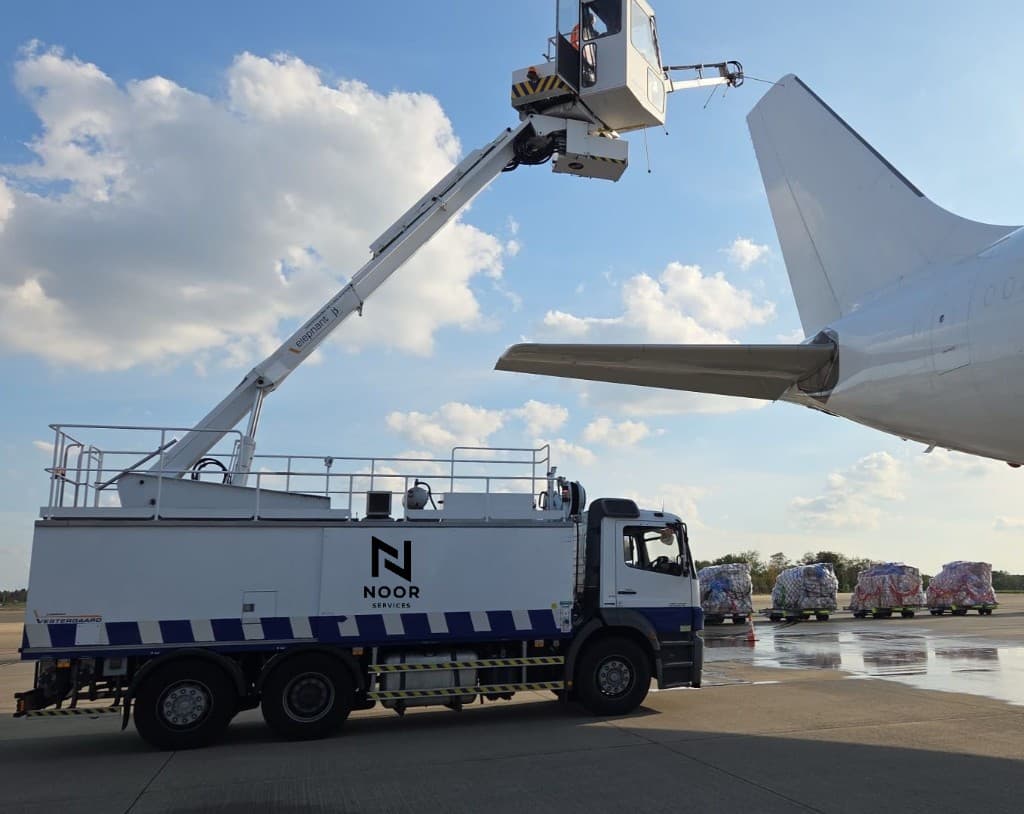
Liège Airport (LGG) is one of Europe's busiest cargo hubs, with a lot of freighter traffic at night. In winter, that is exactly when frost forms and when schedules are tightest. An aircraft cannot depart with frost, ice or snow adhering to its critical surfaces, so de-icing is not an option you decide on at the last minute: it needs to be part of the turnaround plan.
What counts as a critical surface
Wings, control surfaces, the tailplane, the fin and rudder and the engine inlets must be clean before take-off. Contamination on any of them can change the way the aircraft flies, which is why the crew checks the aircraft and asks for de-icing when needed.
What to send with your de-icing request
- Flight number and aircraft registration
- Aircraft type and the areas you want treated (for example upper wing surfaces, tailplane, fin and rudder)
- Expected time of departure and the stand or position
- A contact for the crew or your operations desk
The more precise the request, the easier it is to prepare the right procedure and to fit the treatment inside your ground window.
Fit de-icing into the turnaround
De-icing shares the apron with loading, fuelling, catering and pushback. The best moment is as close to departure as the schedule allows, because that is when the protection is needed. Agree the sequence with your ground handler in advance so that the truck, the crew and the other services do not block each other.
What you should receive afterwards
After each operation we issue a de-icing report with the litres of fluid used, the start and end time, the treated zones and the anti-icing code, so the crew and your operations team have a clear record of what was done.
If you operate through LGG this winter, send us your usual rotations and operations contacts early. We also support the same crews with catering at Liège Airport, so one local team can cover both needs.