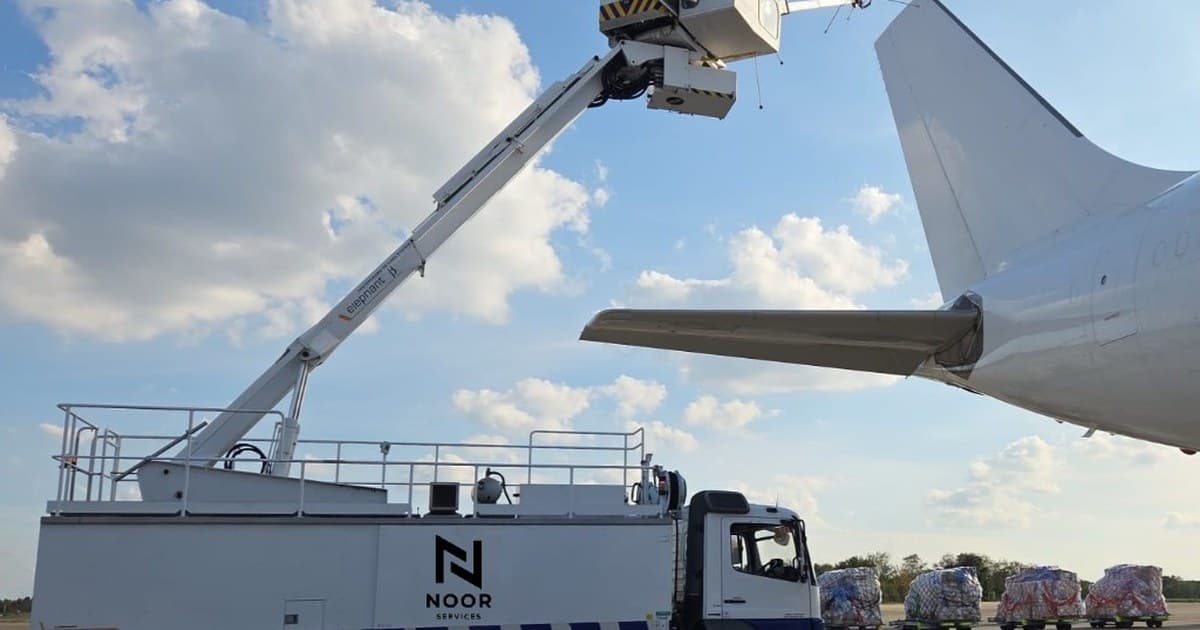
De-icing happens quickly on the apron, but airline operations teams still need a clear record of what was done. That is why every de-icing operation by Noor Services ends with a digital report.
What is in the report
- Flight, aircraft registration and customer
- Start time, end time and duration of the operation
- Procedure used (single-step or two-step) and the weather at Liège Airport
- Litres of fluid used
- The treated zones shown on the aircraft diagram: wings upper and lower, tailplane, fin and rudder, engine inlets, fuselage and other areas
- The anti-icing code and holdover guidance
A secure link for the crew
At the end of the operation, our team can share a secure link. The crew or dispatcher opens it on a phone, reviews what was done (litres, start and end time, treated zones) and can sign on the screen. The name and the signature then appear on the final report.
Signing is optional. If nobody signs, we send the report as it is. If the airline signed the request, that signature is already on file.
Why it helps
For operations teams, the report is the proof of what was applied and when. For handling partners and finance teams, it is a transparent record of every winter event, with the same information every time.
You can see how the whole service works on the aircraft de-icing at Liège Airport page, or contact our operations team to prepare your winter rotations at LGG.