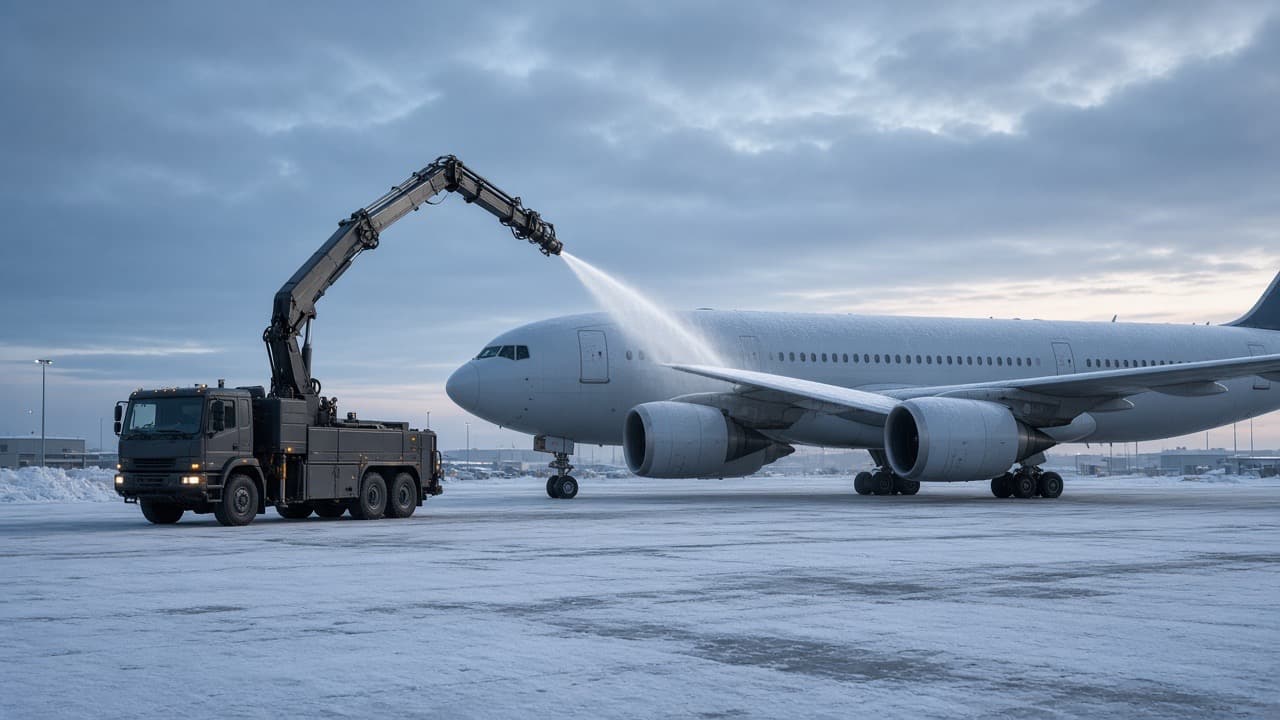
Once the aircraft is de-iced and protected, a clock starts running. That clock is the holdover time (HOT): the estimated time during which the anti-icing fluid prevents frost, ice and snow from building up on the treated surfaces.
What influences holdover time
- The type of fluid and its concentration in the mix
- Outside air temperature
- The type and intensity of precipitation (frost, snow, freezing drizzle or rain)
- Wind and the condition of the aircraft surfaces
Holdover times come from published tables and are guidance, not a guarantee. The crew has to take the actual conditions into account.
The anti-icing code
At the end of the treatment, the crew receives an anti-icing code. It is a short message that tells them what was applied and when the final step started. It contains the fluid type, the concentration, the local time at the start of the final step, the name of the fluid, the date, and the confirmation that the post de-icing / anti-icing check was completed.
With this information the pilot can find the holdover time for the current weather and decide if the aircraft can depart within it.
What happens if the time runs out
If the holdover time is exceeded, or if conditions change, a pre-take-off contamination check is needed, or the aircraft has to be treated again. The decision belongs to the commander of the aircraft, who is responsible for confirming that the critical surfaces are clean.
What we record for you
For every operation we record the anti-icing code and give holdover guidance in the de-icing report, together with the litres used, the start and end time and the treated zones. If you are comparing procedures, see single-step versus two-step de-icing.