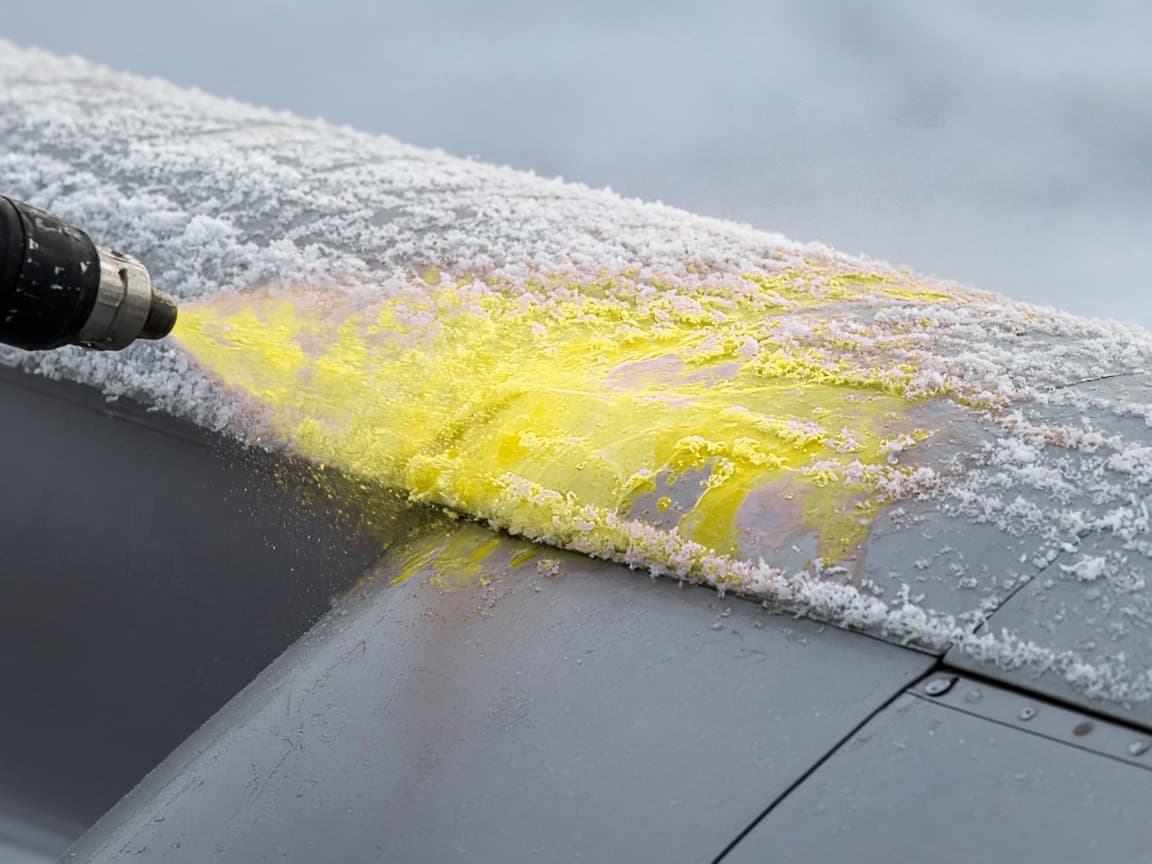
Not every de-icing is the same. Depending on the weather, the aircraft is treated in one step or in two. Understanding the difference helps airline operations teams know what to expect on the apron.
Single-step de-icing
In a single-step procedure, one fluid application removes the contamination and also leaves the aircraft protected. The same fluid does both jobs. It is the shortest way to a clean and protected aircraft, and it is often used when the contamination is light or when time is tight.
Two-step de-icing
In a two-step procedure, the first step removes the frost, ice or snow. The second step applies an anti-icing fluid on the clean surfaces, before the first fluid can freeze, to protect the aircraft while it waits for departure. Two-step is the choice when contamination is heavier or precipitation is ongoing and a longer protection is needed.
How the choice is made
- Outside air temperature and surface temperature
- Type and intensity of precipitation (frost, snow, freezing rain)
- How long the aircraft has to wait before take-off
- The areas requested for treatment
Why it matters for the crew
The protection time, known as holdover time, starts when the final step begins. With either procedure, we record the anti-icing code so the crew can check the holdover guidance for the conditions of the day. Read more in our article on holdover time and the anti-icing code.
You can find the full description of our service on the aircraft de-icing at Liège Airport page.